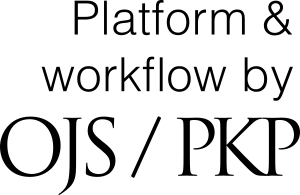
Digitalization and cooperatives. A form of innovation
Abstract
The aim of this study is to analize effective measures to achieve digitalization in cooperatives. It is not a question of digitalization for digitalization’s sake, but rather of achieving it as a means of strengthening sustainability in cooperatives. We seek to boost the governance of cooperatives by identifying measures that introduce digitalization and artificial intelligence into the general meeting, the governing council, the intervention, and, ultimately, the most important decision-making processes within them. Finally, we believe that promoting cooperation can help achieve the two intended goals: digitalization and sustainability. Digitalization, sustainability, and cooperation are synonymous with innovation in the cooperative sector.
Received: 07 May 2026
Accepted: 31 July 2026
Downloads
References
ARRIETA IDIAKEZ, Francisco Javier. 2019. «La colaboración público-privada en el fomento de la economía colaborativa en el ámbito local: Una alternativa a la economía informal que trae causa de la falsa economía colaborativa ». Lan Harremanak 41: 63-86. https://doi.org/10.1387/lan-harremanak.20966.
BOLDÓ RODA, Carmen. 2021. «La asamblea telemática en la sociedad cooperativa». e-Dictum, n.º 112. https://dictumabogados.com/wp-content/uploads/2021/07/doctrina_julio_2021-1.pdf.
BORJABAD BELLIDO, Ramón. 2025. «El reto de las nuevas tecnologías y la digitalización aplicadas al ámbito cooperativo. Manifestaciones de la transición digital en cooperativas agrarias, enseñanza y trabajo asociado en CCAA como Catalunya, Aragón y Valencia». Boletín de la Asociación Internacional de Derecho Cooperativo, n.º 66 (marzo), 37-55. https://doi.org/10.18543/baidc.3178.
BURRI, Thomas. 2018. «Free Movement of Algorithms: Artificially Intelligent Persons Conquer the European Union’s Internal Market». En Research Handbook on the Law of Artificial Intelligence, editado por Woodrow Barfield y Ugo Pagallo, 537-559. Cheltenham: Edward Elgar. https://ssrn.com/abstract=3010233.
COTINO HUESO, Lorenzo. 2023. «Reconocimiento facial automatizado y sistemas de identificación biométrica bajo la regulación superpuesta de inteligencia artificial y protección de datos». En Derecho público de la inteligencia artificial, coordinado por Francisco Balaguer Callejón. Zaragoza: Fundación Manuel Giménez Abad de Estudios Parlamentarios y del Estado Autonómico.
CRUZ RIVERO, Diego. 2018. «Utilización de los medios electrónicos de comunicación en el funcionamiento de las asambleas de las sociedades cooperativas. La experiencia de la Ley 14/2011, de 23 de diciembre, de sociedades cooperativas andaluzas». CIRIEC-España, Revista Jurídica de Economía Social y Cooperativa 32. https://hdl.handle.net/11441/176579.
FELICITAS MUÑOZ, Ana. 2020. «La «inteligencia artificial (IA) autónoma» en el órgano de administración». Revista de Derecho de Sociedades 60: 77-81.
FERNÁNDEZ LARREA, Ignacio. 2024. «La junta telemática». En La transformación digital de las empresas, dirigido por Cecilio Molina Hernández. Madrid: Atelier.
FISHER, Roger, William Ury, y Bruce Patton. 2011. Getting to Yes. Nueva York: Penguin Books.
FUENTES NAHARRO, Mónica. 2023. La digitalización del Derecho de Sociedades: La Directiva 2019/1151 y su transposición al Derecho Español. Navarra: Aranzadi.
FUSTER MORELL, Mayo, Ricard Espelt, y Melissa Renau-Cano. 2021. «Platform Cooperativism: Analysis of the Democratic Qualities of Cooperativism as an Economic Alternative in Digital Environments». CIRIEC-España, Revista de Economía Pública, Social y Cooperativa 102: 5-31. https://doi.org/10.7203/CIRIEC-E.102.18429.
GALEOTE MUÑOZ, María del Pilar. 2023. «Corporate Digitalization in the European Context: Going One Step Further». Advocatus, n.º 43 (Lima): 283-298.
GALEOTE MUÑOZ, María del Pilar. 2025A. «Los administradores y su toma de decisiones en un contexto de inteligencia artificial: Estudio comparado europeo y español». Cuadernos de Derecho Transnacional 17: 257-279. https://doi.org/10.20318/cdt.2025.9878.
GALEOTE MUÑOZ, María del Pilar. 2025B. «Sostenibilidad corporativa y digitalización en el ámbito de la junta general: Problemática en la junta telemática». En Desafíos contemporáneos en el derecho penal, ética empresarial y compliance global, coordinado por Roberto Cruz Palmera. Madrid: Dykinson.
GARCÍA MANDALONIZ, Marta. 2020. Una sociedad mercantil simplificada y digitalizada. Madrid: Dykinson.
MOLINA HERNÁNDEZ, Cecilio. 2025. «La digitalización en la constitución y en la organización de las sociedades cooperativas». La Ley Mercantil 121.
RODRÍGUEZ GONZÁLEZ, Amalia. 2025. «Instrumentos normativos para la constitución de cooperativas con medios tecnológicos». Boletín de la Asociación Internacional de Derecho Cooperativo 67: 47-97. https://doi.org/10.18543/baidc.3288.
SÁNCHEZ VILLALBA, Alicia. 2021. «Las cooperativas de trabajo asociado en las economías de plataforma». CIRIEC-España, Revista Jurídica de Economía Social y Cooperativa 38. https://doi.org/10.7203/CIRIEC-JUR.38.20794.
SCHOLZ, Trebor. 2024. «Platform Cooperativism vs. the Sharing Economy». Big Data & Civic Engagement 47: 47-52.
Last update: 29/06/2026
For articles published in issues 34 (2000) through 67 (2025), copyright and exploitation rights belong exclusively to the journal’s publisher, in accordance with the policy in effect at the time of publication. From issue 68 (2026) onwards, the following licensing terms and copyright provisions apply:
The authors are advised to read their rights carefully. We believe this approach ensures a fair agreement for both parties. These instructions should be read in conjunction with the Ethical Guidelines and the Open Access Policy, Licensing Terms and Copyright of the journal "Boletín de la Asociación Internacional de Derecho Cooperativo (BAIDC)".
1. Authorship and Ethics
By submitting their manuscripts to Boletín de la Asociación Internacional de Derecho Cooperativo (BAIDC), the authors accept and undertake to comply with the conditions of publication without the need to sign an additional transfer agreement with the Publisher (University of Deusto). In doing so, they guarantee that their work is unpublished in any form, original, and does not breach BAIDC’s Ethical Guidelines or the rights of third parties, and that no licences have been or will be granted that are incompatible with the rights granted to the Publisher.
The authors assume full and exclusive responsibility for the content of the study and formally declare that they have no conflicts of interest that affect the integrity of the research.
2. Publisher’s Rights
By submitting the manuscript, the authors agree to its publication under the Creative Commons CC BY-NC-ND 4.0 licence. Consequently, they grant the Publisher the exclusive, royalty-free and worldwide right of first publication, editing, layout and exploitation of the article. This grant authorises the Publisher to distribute, sub-license and index the work in any format, medium, database or institutional repository, for the purposes of promotion and scientific dissemination.
3. Copyright
The authors retain the intellectual property rights to their article and retain the right to distribute and use their work for teaching purposes, future research or personal archiving, provided that the original publication in the Journal is cited. They are also permitted to republish in other media, provided that a (foot)note is included with the full reference to BAIDC (including the DOI, where available) and no explicit endorsement of the Journal and/or Publisher is implied.
4. Open access
BAIDC is an open-access journal; this means that it is freely and fully accessible in its entirety immediately upon publication of its content. However, in accordance with the licence mentioned above, the authors of the articles must always be properly cited; and both commercial use and any modification intended for distribution will require the express prior written permission of the rights holder.
More details are available under the section “Open Access Policy, Licensing Terms and Copyright”.